
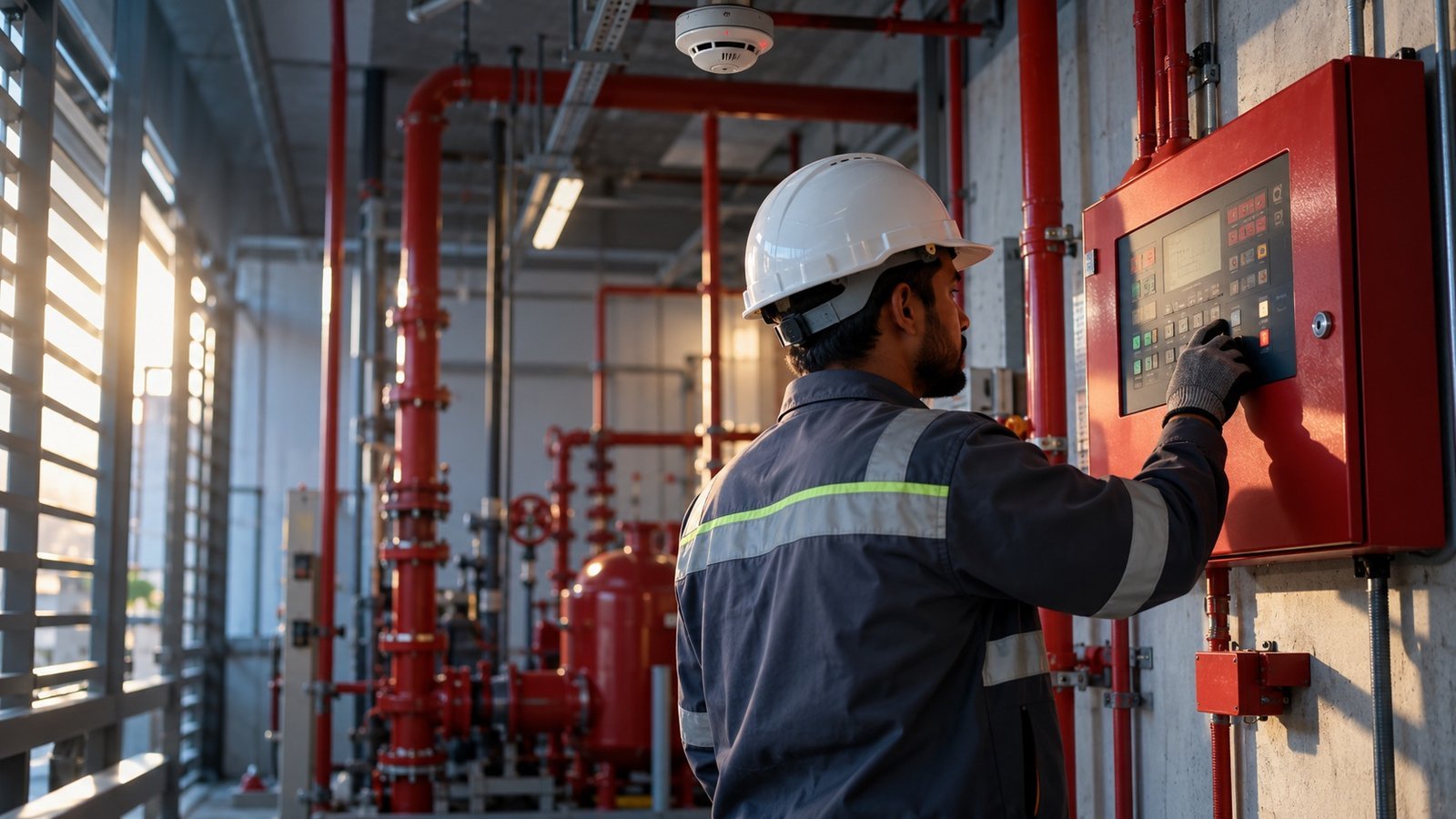
The Building Code of Pakistan Fire Safety Provisions 2016 requires an approved fire alarm and detection system in most non-domestic buildings, designed, installed, tested and maintained to NFPA 72 or another approved standard. Whether a specific building needs one depends on its occupancy type, height and occupant load, and enforcement sits with the local Authority Having Jurisdiction, such as CDA in Islamabad or a provincial building control authority.
This guide summarises fire alarm requirements Pakistan-wide, as set out in the national code, explains which buildings are covered, and shows where NFPA standards come in. It is a practical overview, not legal advice: always check the official text and your local authority's rules before you design or sign off a system.
What the Fire Safety Provisions 2016 are
The Building Code of Pakistan (Fire Safety Provisions 2016) was prepared by the Pakistan Engineering Council (PEC) with the National Disaster Management Authority and notified as S.R.O. 1073(I)/2016 on 31 October 2016. The SRO added a bye-law to PEC's Construction and Operation of Engineering Works Bye-laws, which means building or modifying a structure in breach of the code is treated as a violation of professional engineering works.
The code covers fire prevention, life safety and fire protection for buildings and structures. It is closely aligned with NFPA 1, the Fire Code, and its Chapter 2 lists the referenced standards, including NFPA 10 for portable extinguishers, NFPA 13 for sprinklers and NFPA 72, the National Fire Alarm and Signaling Code (2013 edition at the time of publication). Where the code and a referenced standard differ, the code's own requirement applies.
The full text is available as a PDF from PEC, and a copy is also hosted by the Higher Education Commission for universities. Links are listed in the sources for this article.
New and existing buildings
The provisions apply to both new and existing buildings. New buildings permitted after adoption must comply in full. Existing buildings were given up to three years to comply, but minimum measures, namely a fire alarm and detection system, fire extinguishers, an emergency response plan and fire drills, were to be in place within one year of notification. Repairs, renovations, change of use and additions must also conform to the code.
Fire alarm requirements Pakistan-wide: which buildings need a system
Section 9.7.2 of the code sets out where a fire alarm system is required, occupancy by occupancy. The table below summarises the main cases. Always confirm the occupancy classification with your authority, as mixed-use buildings must meet the most restrictive requirement of the occupancies they contain.
| Occupancy | When a fire alarm system is required (summary) |
|---|---|
| Business (offices, banks) | New buildings of three or more storeys, or with 50 or more occupants above or below the exit discharge level, or 300 or more occupants in total. Existing buildings use higher thresholds of 100 and 1,000 occupants. |
| Health care (hospitals, nursing homes) | Always. Initiation by manual call points, sprinkler flow or detection. Nursing homes also need smoke detection in corridors serving patient sleeping rooms. |
| Educational (schools, universities) | Always, except very small detached buildings, which still need stand-alone smoke detectors. The alarm must not be used for class changes. |
| Assembly (halls, auditoriums) | Occupant loads over 300 and theatres with more than one viewing room, with automatic detection in unoccupied hazardous areas. |
| Industrial (factories) | New and existing, unless the building has fewer than 100 occupants and fewer than 25 above or below the exit discharge level. |
| Mercantile (shops, malls) | Class A mercantile occupancies need both fire alarm and detection. |
| High-rise (over 18 m with lifts) | Always, with fire detection and an approved emergency voice/alarm communication system. |
Hotels, apartments, day-care, detention and storage occupancies have their own rules in the same section. Low-hazard storage, and storage buildings fully protected by sprinklers, can be exempt.
What the code says about the alarm system itself
Where a fire alarm system is required, it must be provided and installed in accordance with NFPA 70 (the electrical code) and NFPA 72, or another approved code or standard, plus the rules in Section 9.7. The main points that shape a design are:
- Manual call points. New systems need a manual fire alarm box within 1.5 m (60 in) of each exit doorway, and no one should have to travel more than 61 m (200 ft) on a floor to reach one. Call points must be visible and unobstructed.
- Automatic detection. Smoke, heat or other detectors are required where the occupancy rules call for them, and sprinkler systems must be connected so that water flow raises an alarm.
- Occupant notification. Audible and visible alarms must be distinctive and heard throughout the building. Where total evacuation is impractical, as in high-rise buildings and hospitals, the code allows staged or selective evacuation with voice instructions. You can read more about this on our public address and voice alarm page.
- Fire safety functions. Where required, the alarm system must trigger door hold-open release, stair and lift-shaft pressurisation, smoke control, unlocking of doors, lift recall and HVAC shutdown.
- Nuisance alarms. The authority can act against systems with five or more nuisance alarms in a year, including requiring monitoring or replacement.
- Listed equipment. Components must be listed or approved for their purpose and installed, tested, inspected and maintained to NFPA 72.
Extinguishers, emergency lighting and egress
A fire alarm is only one part of compliance. The same code requires portable fire extinguishers in all occupancies except one- and two-family dwellings, selected and located to NFPA 10, along normal paths of travel and within set travel distances.
Chapter 10 covers means of egress, including emergency and escape lighting. The code asks for lighting powered independently of the normal supply, switching on within one second of a mains failure, and running for at least 90 minutes. It sets minimum illumination on escape routes and requires luminaires near exits, stairs, changes of direction, fire alarm call points and fire-fighting equipment. Battery systems need a short functional test every month and a full-duration test every year, with written records kept for the authority. Our emergency lighting and evacuation page covers how these systems are designed.
Who enforces the code
The SRO places enforcement with the Authority Having Jurisdiction (AHJ). It names building control, housing and development authorities, district, town and municipal administrations, cantonments, industrial estates, export processing zones, civil defence directorates and others. In practice this means:
- Islamabad: CDA adopted the Fire Safety Provisions 2016 for all new and existing buildings in its jurisdiction. Its Fire and Emergency Services Directorate inspects buildings, and CDA has sealed and fined buildings that did not address fire safety observations or produce the required certificates.
- Provinces and cities: building control authorities, development authorities and civil defence directorates apply the code alongside their own building regulations. Requirements for approvals and completion certificates vary, so check with the authority where the building sits.
- Clients and insurers: banks, multinationals, export manufacturers and insurers often ask for NFPA-based designs and test records even where local enforcement is light.
Where NFPA 72 fits in practice
Because the Pakistani code refers to NFPA 72 for fire alarm design, installation and testing, most consultants in Pakistan specify fire alarm systems to NFPA 72. It governs detector spacing, notification appliance audibility, circuit classes, battery standby, and inspection, testing and maintenance. The code's appendix even includes NFPA 72 style record-of-completion and inspection forms. Some projects, particularly those designed by UK or European consultants, use BS 5839 or EN 54 instead, which the code allows as "any approved code/standard" when the authority accepts it.
The practical point is that compliance is not only about the equipment. A code-compliant system needs a documented design, correct installation, commissioning, and records of regular testing and maintenance that you can show an inspector.
A practical compliance checklist
- Confirm the occupancy classification, height and occupant load with your consultant and authority.
- Get a fire alarm design to NFPA 72 (or another approved standard) that covers detection, call points, notification and interfaces. Our design and engineering team can prepare or review one.
- Use listed or approved panels, detectors and devices, installed by trained technicians.
- Link the alarm to door release, lifts, HVAC and smoke control where the code requires it.
- Check that extinguishers, emergency lighting and exit signage meet the same code.
- Keep completion records, test logs and maintenance reports ready for inspection.
For system options, see our fire alarm systems and wider fire and life safety pages.
Frequently asked questions
Is a fire alarm system mandatory in Pakistan?
For most non-domestic buildings, yes. The Building Code of Pakistan Fire Safety Provisions 2016 requires fire alarm and detection systems in health care, educational and high-rise buildings, and in business, industrial, assembly and mercantile buildings above set size or occupancy thresholds.
Which standard should a fire alarm in Pakistan follow?
The code refers to NFPA 72 for fire alarm design, installation, testing and maintenance, and most Pakistani consultants specify it. Another approved code, such as BS 5839, can be used where the Authority Having Jurisdiction accepts it.
Who enforces the Fire Safety Provisions 2016?
The Authority Having Jurisdiction for the building, such as a building control or development authority, cantonment, municipal administration, industrial estate or civil defence directorate. In Islamabad, CDA adopted the code and inspects buildings.
Do existing buildings have to comply?
Yes. Existing buildings were required to comply with the code, and minimum measures such as a fire alarm and detection system, extinguishers, an emergency response plan and fire drills were to be in place within one year of notification.
Resco has designed, supplied, installed and maintained building systems in Pakistan since 1990, including fire and life safety systems. If you need a fire alarm system designed, upgraded or reviewed against the code, request a proposal or contact us on +92 21 36378960-2 or info@resco.com.pk.