
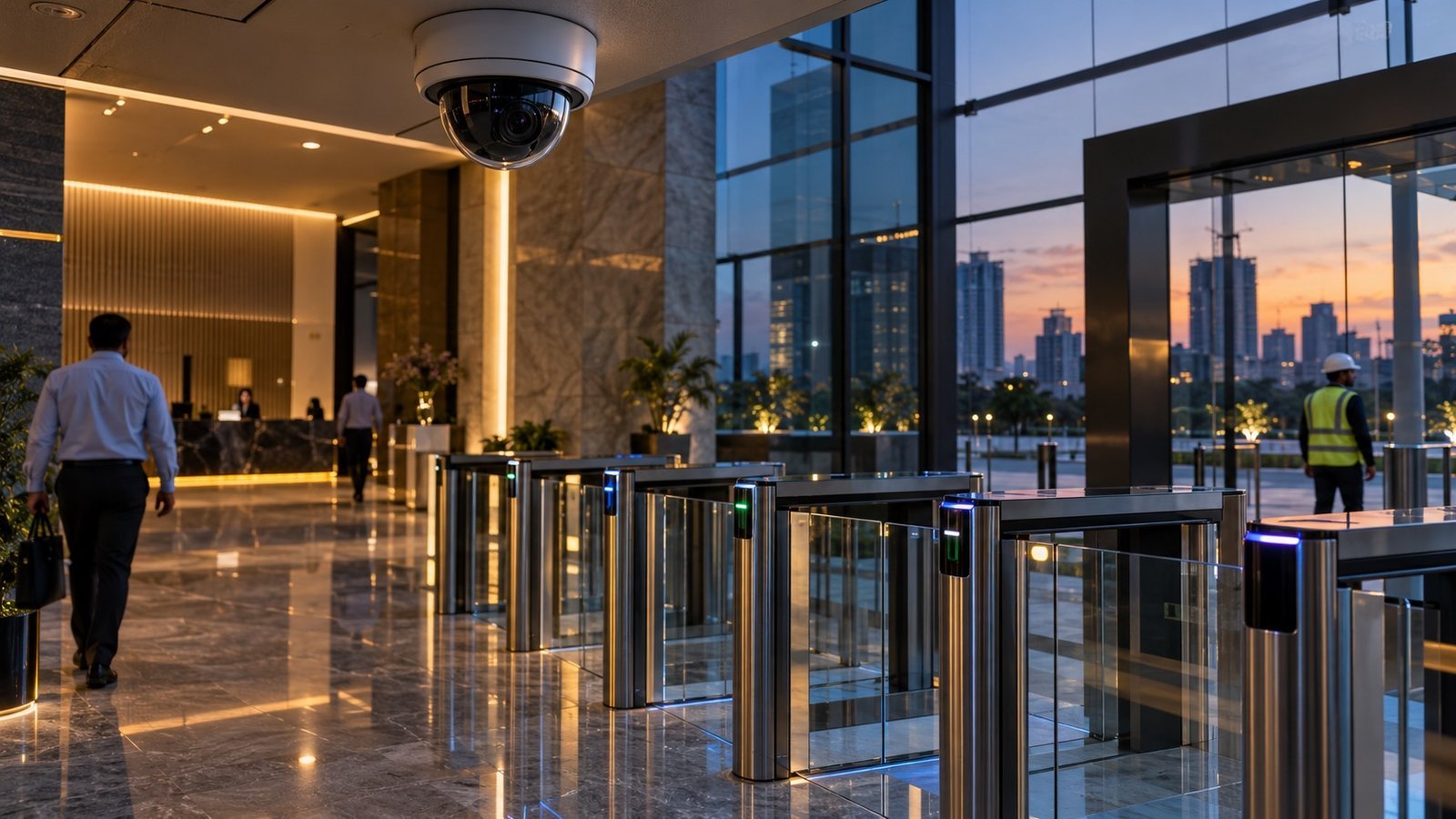
Access control system price in Pakistan depends mainly on how many doors you control and what each door needs: the reader type, the lock and door hardware, the controller, the cabling and the fire-alarm release. Software licences, integration and the annual maintenance contract add to that. Two quotes for the "same" system can differ widely because they include different hardware per door, so compare scope line by line rather than totals.
This guide explains each cost driver without quoting prices, since prices change with exchange rates and specification. Use it to understand quotes and to prepare a clear request for a proposal.
What drives access control system price in Pakistan
| Cost driver | What changes the cost | Questions to ask |
|---|---|---|
| Door count | Each door adds reader, lock, exit device, cabling, controller input | Which doors really need control? Entry only, or entry and exit? |
| Reader type | PIN, card, fingerprint, face or multimodal | Who uses each door, and how strong must identity checks be? |
| Locks and door hardware | Maglock, electric strike, electric mortise lock, closers, brackets | What are the doors made of? Glass, wood, steel, fire-rated? |
| Controller architecture | Standalone readers vs networked multi-door controllers | Do you need central control, reports and multi-site management? |
| Cabling and containment | Cable runs, conduit, trunking, false ceilings, network points | Is the building finished or under construction? |
| Fire-alarm interface | Relays, monitored release, break-glass units | Which doors are on escape routes? |
| Software and licences | Door, user or module licences; server; integrations | Do you need attendance, visitors, lifts or CCTV integration? |
| AMC and support | Preventive visits, response times, spares | Who maintains it after the warranty ends? |
1. Door count and door type
Door count is the first multiplier. A main entrance, a server room and two office doors is a very different project from 60 doors across four floors. Also decide whether each door needs a reader on one side only (with an exit button or request-to-exit sensor inside) or readers on both sides for anti-passback and full entry and exit records. Two readers per door costs more but gives better audit trails.
Door type matters too. Frameless glass doors need different locks and brackets from timber or steel doors, and fire-rated doors limit which hardware can be fitted without affecting their rating.
2. Reader type: card vs biometric door access
The card vs biometric door access choice affects both upfront and running cost.
- Card or fob readers are cheaper per door and fast to use. Older 125 kHz proximity cards are easy to copy with cheap tools; 13.56 MHz encrypted smart cards such as MIFARE DESFire are much harder to clone and are the better choice for new systems. Cards are lost and shared, so budget for replacements.
- Fingerprint readers prove who is at the door, not just which card. They need enrolment and can struggle with worn or dirty fingers.
- Face recognition terminals are touchless and quick, but cost more per door and need sensible mounting and lighting.
- Multimodal readers combine methods, for example card plus fingerprint for sensitive rooms.
How the reader talks to the controller also matters. Wiegand is common and cheap but unencrypted; OSDP supports encryption and reader supervision. Ask which one is being quoted.
3. Locks and door hardware
Hardware is often underestimated. Common options are:
- Electromagnetic locks (maglocks): simple and widely used; they unlock when power is removed, so they fail safe.
- Electric strikes: work with the existing lockset; available in fail-safe or fail-secure versions.
- Electrified mortise locks and exit devices: neater and stronger, but cost more and need door preparation.
Add door closers, brackets for glass doors, door position contacts, exit buttons and emergency break-glass units. A proper access control for office doors quote lists this hardware per door.
4. Controller architecture
Small sites can use standalone readers that store users and open the door themselves. They are cheap, but each door is managed separately and reporting is limited. Networked systems use controllers that serve two, four or more doors, connect to a server, and give central user management, schedules, alarms and reports. They cost more upfront but are far easier to run as the number of doors and users grows. Controllers should also be placed on the secure side of the door, not in the reader, so tampering with a reader cannot open the door.
5. Cabling and installation conditions
Every door needs cable for the reader, lock power, door contact and exit button, back to a controller and power supply. Access control installation cost rises with long cable runs, hard ceilings, surface trunking in finished areas, and work that must happen outside office hours. It is cheaper to add containment during construction or fit-out than to retrofit later, so involve your integrator early.
6. Fire-alarm release interface
Doors on escape routes must let people out in an emergency. NFPA 101 requires electrically locked egress doors to release on fire-alarm activation and on loss of power, and the Building Code of Pakistan Fire Safety Provisions 2016 is benchmarked against NFPA codes. In practice this means relays from the fire alarm panel to the access control power supplies, green break-glass units at doors, and testing during commissioning. Leaving this out of a quote makes it look cheaper but creates a life-safety gap.
7. Software, licences and integrations
Some systems include free basic software; others licence by door, by user or by module. Costs increase if you add time attendance, visitor management, elevator access control, CCTV event linking or HR and payroll integration. Also budget for a server or virtual machine, database licences if required, and backups.
8. Maintenance and lifecycle
An annual maintenance contract covers preventive visits, lock and power supply checks, firmware and software updates, battery replacement and response to faults. It is a real part of total cost, and it protects the investment. Ask what response time is offered and whether critical spares are held locally.
How to prepare a request for a proposal
A clear brief gets comparable quotes. Include:
- Floor plans with each door marked and numbered.
- A door schedule: location, door material, single or double leaf, fire rating, entry-only or entry and exit.
- Who uses each door and how strong the identity check must be (card, fingerprint, face, or two factors).
- Number of users now and in three to five years.
- Which doors are on escape routes and the fire alarm panel type.
- Integrations needed: attendance, visitors, lifts, CCTV, payroll.
- Whether the site is under construction or occupied, and working-hour restrictions.
- Warranty, training and AMC expectations.
Our access control systems page explains the options, and the request a proposal form lets you send this information in one place.
Frequently asked questions
What is the biggest factor in access control system price in Pakistan?
The number of controlled doors, and what each door needs. Every door adds a reader, a lock, an exit device, cabling and controller capacity, so door count and door type usually drive cost more than the software.
Is biometric door access more expensive than card access?
Usually per door, yes, because biometric readers cost more than card readers and need enrolment. Cards add a running cost for replacement and lost cards. Many sites use cards on general doors and biometrics only where identity must be proven, such as server rooms or cash areas.
Do access-controlled doors need to connect to the fire alarm?
Doors on escape routes should release automatically when the fire alarm activates. The Building Code of Pakistan Fire Safety Provisions 2016 is benchmarked against NFPA codes, which require locked egress doors to release on fire alarm and on loss of power. Budget for the interface and the relay wiring.
What should an access control proposal include?
A door schedule, reader and credential type, lock and door hardware per door, controller layout, cabling, fire-alarm interface, software licences, installation, commissioning, training, warranty and AMC terms. Missing lines usually become variations later.
Since 1990, Resco has designed, supplied, installed and maintained building systems, including access control, for banks, hospitals, universities, manufacturers and government organisations across Pakistan. To get a quote built on your actual doors, request a proposal, call +92 21 36378960-2 or email info@resco.com.pk.